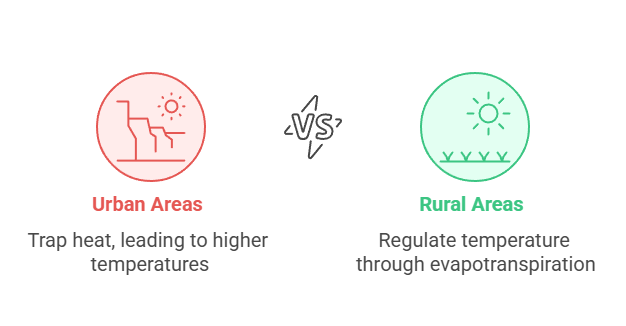
Ever noticed how a summer day feels drastically different in Hyde Park compared to, say, Oxford Street? That’s the urban heat island effect in action. In essence, it’s the phenomenon where urban areas experience significantly warmer temperatures than their surrounding rural counterparts. And a huge part of that is down to all the hard surfaces – the concrete, asphalt, and brick that make up our cityscapes.
Think of it like this: on a hot day, the sun’s energy pours down. Natural landscapes with trees and grass absorb some of that energy through a process called evapotranspiration (basically, plant “sweating”), and they reflect some back. But concrete and asphalt? They soak up the sun’s rays like a sponge, trapping the heat during the day and slowly releasing it at night. This means that even after the sun goes down, the city stays warmer than it should, preventing the nighttime cooldown that nature intended.
